Pockets of Green: A Sea-Glass Weekend on Anglesey’s Storm-Shifted Shores
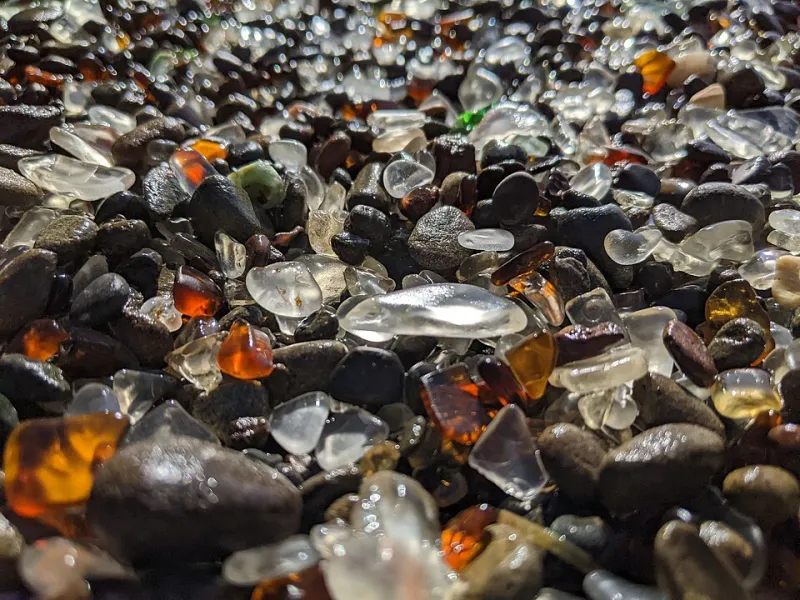
Photo: Grendelkhan, CC BY-SA 4.0, via Wikimedia Commons
There is a particular quiet that follows a gale on Ynys Môn. The wind drops, the sea keeps a heavy roll, and the strandline is suddenly a different place: weed, driftwood, shell grit and, if you are lucky, small pieces of glass worn soft by years of salt and stone. Beachcombing is not really a hunt. It is a way of walking slowly, and Anglesey is very good at making you do that.
The Black Lion makes a sensible base for it. You can spend the day with wet cuffs and a pocket full of green, then come back to a fire, a plate and a bed that does not rock. This is a weekend built around weather and tides rather than clock-watching, which is exactly the point.
Read the beach before you read the tide table
Sea glass likes movement, but not constant violence. The best beaches tend to be a mix: shingle or coarse sand, a bit of shelter, and enough wave action to shift stones without grinding everything to dust. On Anglesey you will find all sorts of variations within a short drive. Sheltered coves hold glass in the lee of rocks. Open strands spread it thinly along the high-water line. Storm beaches pile material into ridges, and those ridges are where the interesting stuff hides.
Look at the shape of the shore before you start walking. A steep bank of shingle above the current tide line is a clue. So is a band of dried weed and rope and feather. That is the last high tide’s handwriting. Follow it slowly. Most people walk too fast, eyes on the horizon. The trick is to look a few paces ahead, not at your boots, and let the colours come to you.
Anglesey’s geology helps. The island has plenty of dark rock and pale sand, so a piece of frosted green or amber stands out. Blue is rare enough to feel like a small event. White is common and still lovely. The real prize, for many collectors, is a piece that has been tumbled until the edges are soft as a pebble and the surface looks like it has been breathed on by the sea.
Tide, wind and the day after
The practical rule is simple: go after the weather, not during it. A big blow stirs things up and throws fresh material onto the beach. The following day, especially on a falling tide, is often better than the storm itself. You want to be on the beach as the water pulls back, not chasing it in. Spring tides expose more ground. Neap tides are gentler and safer but can be less productive.
Check a proper tide table for the exact stretch you plan to walk. Do not rely on a general island forecast. The north coast and the more exposed western shores can feel like different countries on the same morning. The Met Office gives you the wind; the tide table gives you the window. Give yourself more time than you think you need, and never let the sea get between you and the path.
Winter and early spring are the classic storm-beach seasons, but they are also when the light is short and the rocks are slippery. A head torch is not dramatic. It is just sensible. So is a flask, a spare pair of gloves and a bag that can take a wet piece of pottery without covering everything else in sand.
A weekend paced like a strandline
Arrive on Friday evening if you can. Settle in, eat something warm and look at the tides for the next two days. There is no advantage in rushing out in the dark. The pleasure of this sort of weekend is in the margins: a slow breakfast, a second cup of tea, boots by the door.
On Saturday, pick one beach for the morning and one for the afternoon. The first should be easy underfoot, a place to learn what the wrack line is telling you. The second can be wilder, if the wind allows. Take lunch with you or plan around a café or pub, but keep the day loose. Beachcombing rewards dawdling. If you find a good stretch, stay on it. There is no prize for covering miles.
Sunday should be shorter. A headland walk, a last look at the high-water mark, then back for a proper lunch before the drive home. If the weather turns, the order changes: fire first, beach later, or not at all. A pub weekend should not feel like a military exercise.
What to pocket, what to leave
The etiquette is straightforward. Take a small amount for yourself and leave the rest. A pocketful is plenty. Do not strip a beach because it is having a good day. Leave driftwood, shells, sea pottery and anything that looks like it belongs to the place rather than to you. Do not take from protected sites or disturb dunes, nests or rock pools. If you turn over a stone, put it back.
Sea glass is rubbish made beautiful, but sharp edges still exist. Check pieces before they go into a pocket, especially if children are collecting. A cloth bag is better than a plastic one that will split. And take a bit of litter out with you. Beachcombers are well placed to leave a shore cleaner than they found it.
The fireside finish
Back at the Black Lion, the day shrinks to the important things: dry socks, a pint, a plate of something hearty and the small clink of glass in a coat pocket. Spread your finds on the table and sort them by colour. The green ones always look better by firelight. You will probably forget which cove gave you which piece, and that is fine. The weekend was never really about the collection.
It was about the walk after the storm, the tide turning, the smell of weed and cold air, and the moment you look up and realise you have been staring at the ground for an hour in complete contentment. Anglesey does that. The Black Lion just gives you somewhere warm to put your boots afterwards.