Check In, Boots Off: The Case for Making a Pub Your Anglesey Base
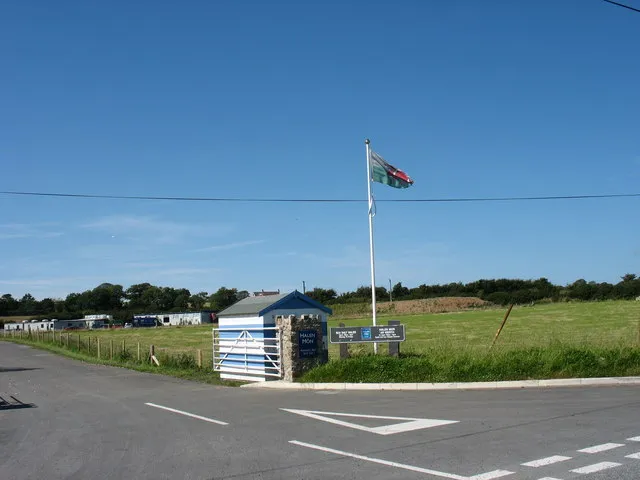
Photo: Colin Craig, CC BY-SA 2.0, via Wikimedia Commons
There is a particular kind of holidaymaker who arrives at the Black Lion with a wet rucksack, a dog and a slightly apologetic expression, as though staying above a pub were somehow a compromise. It is a strange assumption. Within an hour they are usually settled by the fire, boots drying somewhere sensible, arguing cheerfully about whether the walk to the lighthouse counts as a walk if it is under a mile.
This is the argument for the pub as a travel base on Ynys Môn — not because cottages are bad, but because a pub with rooms quietly solves problems that self-catering invents for itself.
The cottage is lovely. Nobody there tells you anything.
A self-catering cottage gives you space, a washing machine and a key safe with a four-digit code. What it does not give you is a person. On a wet Tuesday in November, when the forecast has changed three times and the planned day out no longer makes sense, that absence is keenly felt.
A pub is staffed by people who live here. That is the entire proposition. You ask what the road to the beach is like after rain, whether the tide will be in at two, which stretch of coast is sheltered when the wind swings round to the south-west, and where you can get a decent sandwich at half three. The answers come free, usually with an opinion attached, and often with a story you did not ask for but are glad to have heard.
The bar as the best tourist information centre on the island
Guidebooks go stale. Search results go generic. The bar does neither. It is where you find out that a lane is closed, that a car park fills by ten on a sunny Sunday, that a certain cove is worth the detour but only at low water, and that the chippy shuts early on Mondays.
For walkers especially, this matters. Anglesey's coastal path is not hard in the technical sense, but it is exposed — wind, spray, mud, and sections that are far slower than the map suggests. Local advice turns a walk from a gamble into a plan.
Wet weather is not a crisis, it is an itinerary change
Here is the great advantage of staying where you eat. If the morning is a washout, you have not lost a day; you have simply moved lunch forward and gone out in the afternoon when the front has passed. There is somewhere warm to sit, something hot to drink, and no pressure to be anywhere.
Self-catering in the rain means a small kitchen, a damp coat over a chair and the slow realisation that you have to go out again for milk. Staying at a pub means the weather becomes an inconvenience rather than a catastrophe.
Breakfast is part of the holiday
It is easy to underestimate this. A proper breakfast does three things a self-catered bowl of cereal cannot: it gets you out of the door at a reasonable hour, it removes a decision from your morning, and it sets the tone for the day. Walkers who have eaten properly walk further. Dog owners who have eaten properly are more patient with dogs. It is simple arithmetic.
And there is something quietly civilising about coming down to a table that has been laid by somebody else, particularly when the day ahead involves mud.
Boots by the door: walkers, dogs and the small practicalities
A pub that welcomes walkers knows what walkers need. Somewhere to leave wet kit. Somewhere to hose a spaniel. A floor that does not care about mud. Storage for a bike. Parking that is not a competitive sport at nine in the morning.
Dogs are the acid test. A genuinely dog-friendly pub is not one that tolerates dogs with a sigh; it is one where the dog gets noticed, gets water, and gets a bit of attention from whoever is behind the bar. Anyone travelling with a dog on Ynys Môn will tell you the difference is enormous, and it is the single most common reason people come back.
A base for short breaks, not just fortnights
The UK weekend break is the real growth area, and it is where pub-and-stay wins outright. Two nights, one full day, one good walk, one good dinner, home. No key handover times, no cleaning deposit, no mid-week minimum stay, no arrival window that forbids you from stopping for lunch on the way.
Arrive Friday evening, eat, sleep, walk Saturday, eat again, drive home Sunday feeling like you have actually been away. That is a better use of a weekend than most fortnight-long holidays manage.
Where the argument gets weaker
Honesty matters, so: a pub is not for everyone. If you want to cook for yourself, spread out across three rooms, or stay up until two in the morning playing music, a cottage is unambiguously the better choice. Families with very small children may prefer the privacy and the kitchen. If you need absolute silence at half nine, be realistic about a building with a bar in it.
And booking direct matters — pubs with rooms are small businesses, and room numbers are limited. Peak summer weekends go early, and the best-value breaks are the shoulder seasons: late spring, and the stretch from September into November when the light turns and the coast empties out.
How to do it well
- Tell the bar what you are planning — they will tell you if it is a good idea
- Ask about tides before any beach or estuary walk
- Book a table for the evening as well as the room; you will not want to drive again
- Bring a second pair of boots
- Leave the car parked and walk from the door when you can
The pub is not just where you sleep on this island. It is where the island explains itself to you. Everything else — the paths, the coves, the long views across the strait — follows from that first conversation at the bar.